I'm currently working on neurotechnology, cognitive security, neurosecurity and computational models. I'm interested in developing novel standards and architectures that enable new thinking systems. Before that I spent a decade building data models, data orchestration and ML infrastructure underneath other people's models.
I'm interested in intelligence, in three forms
Human intelligence
Neuroscience, cognitive science and human behavior. Neural signatures, human agency, neural decoding and brain foundation models.
Machine intelligence
Machine learning, MLOps and the infrastructure it runs on. Model security, causal reasoning, machine cognition and open-weight models.
Systemic intelligence
Institutional systems, collective intelligence that emerges between people, governance, education policy and equity.
Bio
I started as an engineer at Microsoft, working on Kubernetes, Terraform and ML pipelines, then took an MRes in Neurotechnology at Imperial College London in the Brain and Behavior Lab, on gaze selection and brain-machine interfaces. I spent the next several years on financial infrastructure — senior MLOps engineer at Ripple, where I also served as president of Black at Ripple, then staff data platform engineer at Circle — building feature stores, data catalogs and the orchestration underneath them.
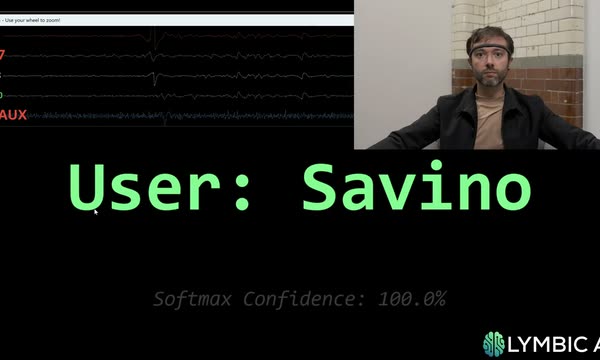
Along the way I co-founded Lymbic AI in London, which built EEG-based privacy-preserving biometrics. I also started the Cerberus Neurosecurity Research Institute. I'm now working independently on the systems that move neural data, the models that read it, and the standards that will decide who any of it is safe for.
Other interests:
Motorcycles
Boxing
Sailing
Jazz
Film
Selected Projects
EEG Biometric Identification
Lymbic AI · CNNs · Muse2 · MLOps · 2022–
Novel convolutional networks that identify a subject from resting-state EEG, as the basis for a privacy-preserving biometric. Includes the training pipeline behind it: feature extraction, preprocessing, deployment and edge compute.
Open source · virtual camera driver · real-time face swap · 2024
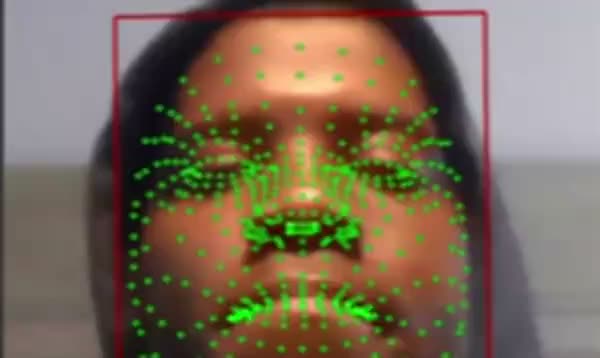
A demonstration that a video call proves nothing about who is on it. Hijacking the virtual camera driver puts a real-time face swap into a live Zoom call, so the far end sees a face that was never in front of the lens. Built quickly and used in investor conversations to make the case for camera integrity.
Enhanced VR & BMI Robot
Imperial College London · Brain and Behavior Lab · Prof. Aldo Faisal · 2021
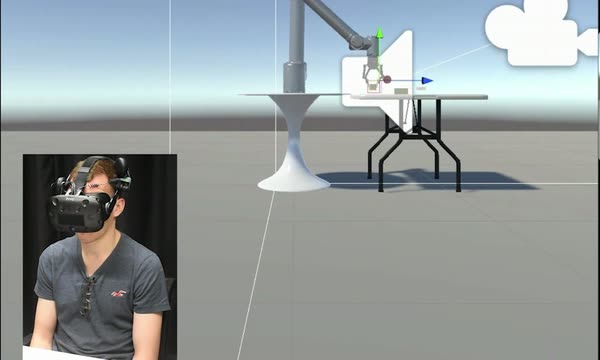
MRes thesis. Gaze tracking drives a virtual UR10 robot in Unity: decoded eye-fixation classifications are paired with machine learning and an action grammar to address the Midas touch problem in gaze selection.
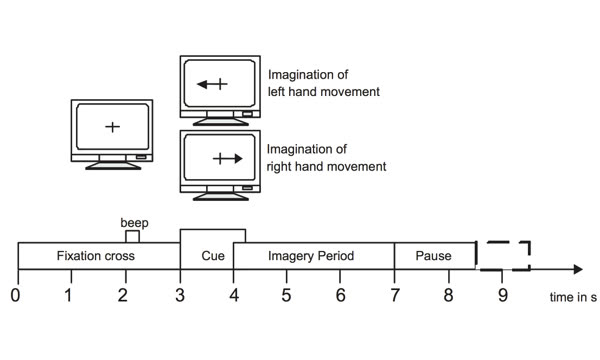
A reproduction of Tayeb et al. on decoding motor imagery from EEG, read through memory-equivalent capacity. The shallow methods do not reproduce, and the deep models’ reported 95% accuracy comes from sliding windows and 5-fold cross validation leaving the same trial in both training and test.